Start Simple.
Build Toward an
Intelligent World.
AIIP does not need to build the entire future on day one. The strategy is to begin with technology that already exists, prove the identity model, and then expand toward more natural AI-powered identity experiences.
Explore the Roadmap

The Long-Term AIIP Vision
To build a trusted identity layer that allows a person to move securely between AI, devices, digital services and physical environments using one intelligent identity — while remaining in control of what information is shared and which devices or systems are allowed to interact with them.
The AIIP Evolution
Each stage builds on the identity and permission foundation created in the previous stage.
1.0
Connected Identity
The first phase focuses on proving the core AIIP model: one identity, multiple devices, controlled permissions and useful AI-assisted identity exchange. This phase can use NFC-enabled hardware and smartphones because those technologies are already widely available.
2.0
Beyond the Manual NFC Tap
The second stage explores more natural ways to identify intentional interactions. Technologies such as Bluetooth Low Energy, Ultra-Wideband and device-to-device signals may eventually reduce dependence on manually bringing a smartphone directly to an NFC device.
3.0
AI Understands Authorized Context
The third phase moves toward AI assistants that can understand who a person is, where they are and what they are trying to do — only within the permissions the user has authorized. AIIP could become a bridge between identity and intelligent assistance.
4.0+
Identity Becomes Infrastructure
The long-term opportunity is for AIIP to become an identity layer that works across multiple digital and physical ecosystems. Homes, vehicles, offices, hotels, events, wearables and future intelligent services could all interact with the same trusted identity layer.
What AIIP Should Build First
The vision is large, but the first product should remain focused. AIIP 1.0 only needs to prove four important things.
Identity
Can one user create a persistent AIIP identity that remains independent of hardware?
Multiple Devices
Can a single identity securely manage more than one physical credential?
Permissions
Can users clearly decide what information each interaction is allowed to reveal?
AI Value
Can AI make the identity exchange meaningfully better than a normal QR code or business card?
From Tap to Intent.
NFC is useful for the first version because it is simple, low-cost and already supported by smartphones. But the longer-term challenge is not simply detecting who is nearby. It is understanding: Who do you actually intend to connect with?
Distance
How close are two people or devices?
Direction
Are the two users physically facing or approaching each other?
Deliberate Gesture
Did the users perform a handshake, tap or other intentional action?
Mutual Consent
Do both parties approve the identity exchange?
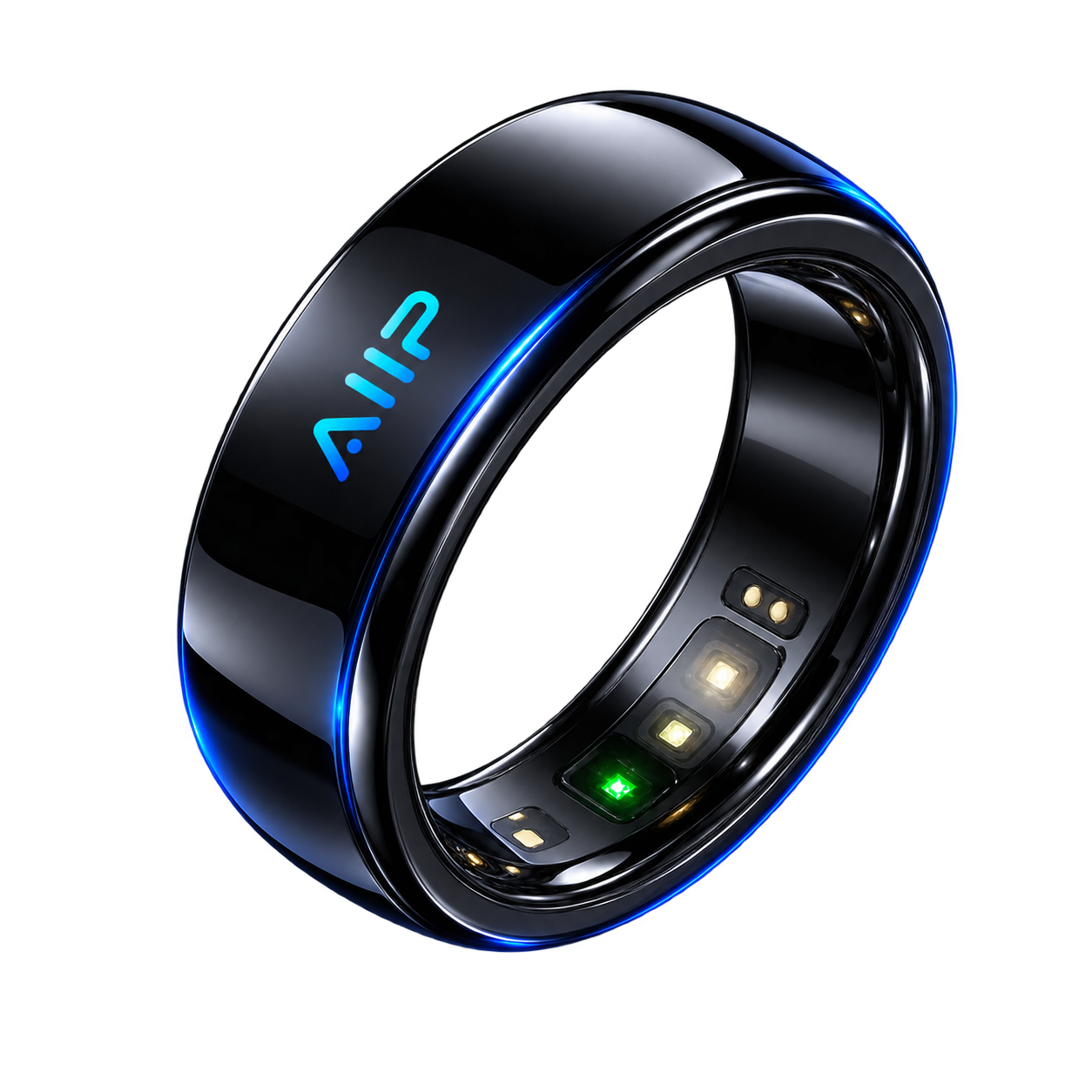
From Identity to Contextual Intelligence.
Eventually, AIIP can become much more than a system that tells another person your name. The bigger opportunity is helping AI understand the right authorized context at the right moment.
Entering a Meeting
AI recognizes authorized participants and prepares relevant meeting context.
Meeting a New Person
AI explains useful approved background, shared interests and collaboration possibilities.
Entering a Smart Environment
Authorized systems can personalize the environment according to identity and permissions.
Using Different Devices
The user remains the same even when the physical interface changes.
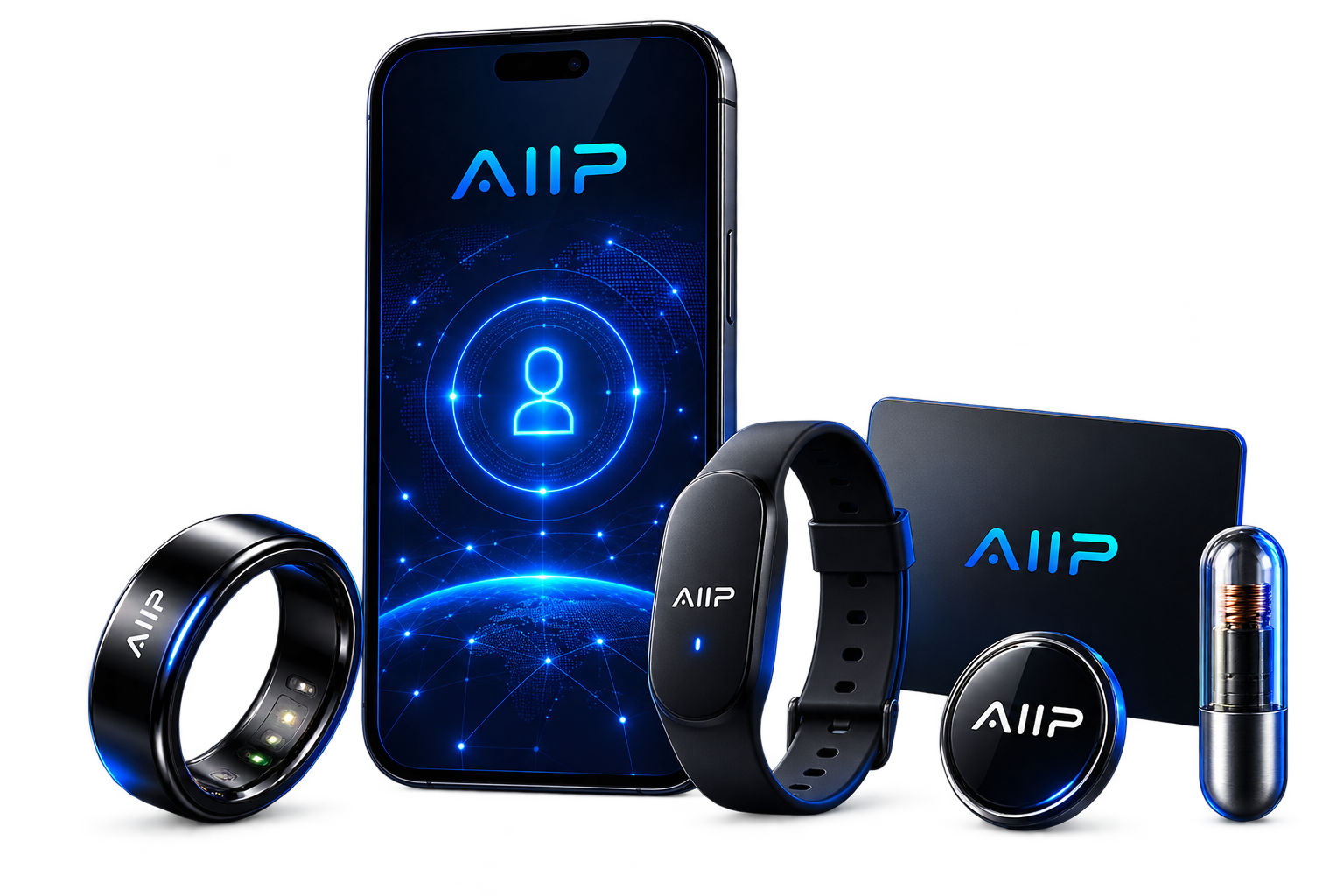
The Future AIIP Ecosystem
The identity layer can eventually connect to many different environments.
Smart Home
Authorized household identity and personalized environments.
Workplace
Employee identity, access and AI work context.
Events
Smart networking, registration and connection history.
Hospitality
Authorized guest identity and personalization.
Vehicles
Future authorized driver and mobility identity.
Wearables
Rings, watches, glasses and future device types.
AI Assistants
Permission-based identity and contextual intelligence.
Future Services
New identity experiences that have not yet been invented.
Technology Can Change. Identity Remains.
AIIP should not depend forever on one chip, one wearable or one communications standard.
NFC
Practical starting point for tap-based identity interaction.
BLE
Potential nearby-device discovery and interaction.
UWB
More precise distance and direction awareness.
AI Wearables
Glasses, earbuds and new AI interaction devices.
Future Technology
AIIP identity remains independent of the hardware interface.
What Should Never Change
The technology may evolve. The core AIIP principles should remain consistent.
One Identity
The user's identity remains independent of any one piece of hardware.
User Permission
Identity sharing remains controlled by appropriate authorization.
Device Flexibility
Users can add, replace and revoke hardware.
Useful AI
AI should use trusted context to create meaningful user value.
A Roadmap Is Direction — Not a Product Promise
The AIIP roadmap describes the intended strategic direction of the platform. Specific technologies, hardware products, integrations, timelines and features may change as AIIP progresses through research, development, testing and commercial validation.
Some future concepts may also require partnerships, technical standards, regulatory review or third-party system integration before deployment.
Build Today. Design for Tomorrow.
AIIP begins with identity and devices, but the long-term opportunity is much larger.